Ten Things You Must Know About the 2026 Staatsloterij World Rowing Championships
The Staatsloterij World Rowing Championships at the Bosbaan is packed with fun trivia, remarkable facts, and a few rules. From world records to “family boats,” and from long-standing rivalries to multiple-time world champions – here are ten highlights alongside a reminder for visitors.
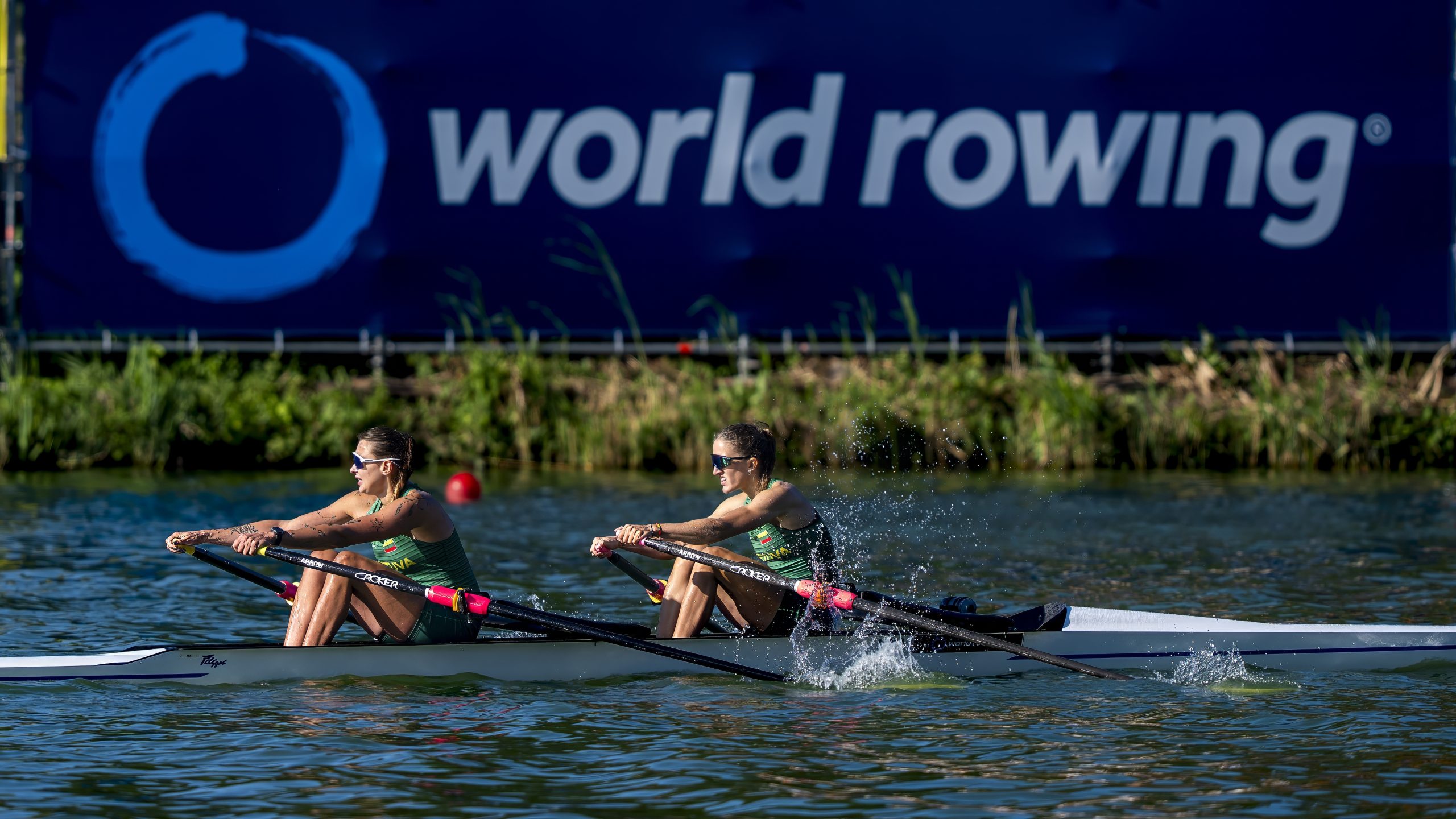
The women’s single sculls is one of the most eagerly anticipated events. In 2025, it was the most thrilling race of the week: Ireland’s Fiona Murtagh edged out Great Britain’s Lauren Henry by just 0.03 seconds – she closest finish across 37 single sculls finals. Both rowers return this year alongside Olympic champion Karolien Florijn, who skipped last year’s World Championships. This year might even see the fall of the oldest world record in rowing (7:07.71, Rumyana Neykova, Seville 2002); Murtagh came within 2.05 seconds of it in 2025.
The Bosbaan is renowned as the fastest 2,000-meter course in the world. Eight current world records were set here – all on August 29 and 30, 2014 – more than on any other course. Tokyo follows at a distant second with five records.
Croatian brothers Martin and Valent Sinković also share a special connection with the Bosbaan. In 2014, they set a double sculls world record of 5:59.72 here that still stands today. They return to compete once again this year.
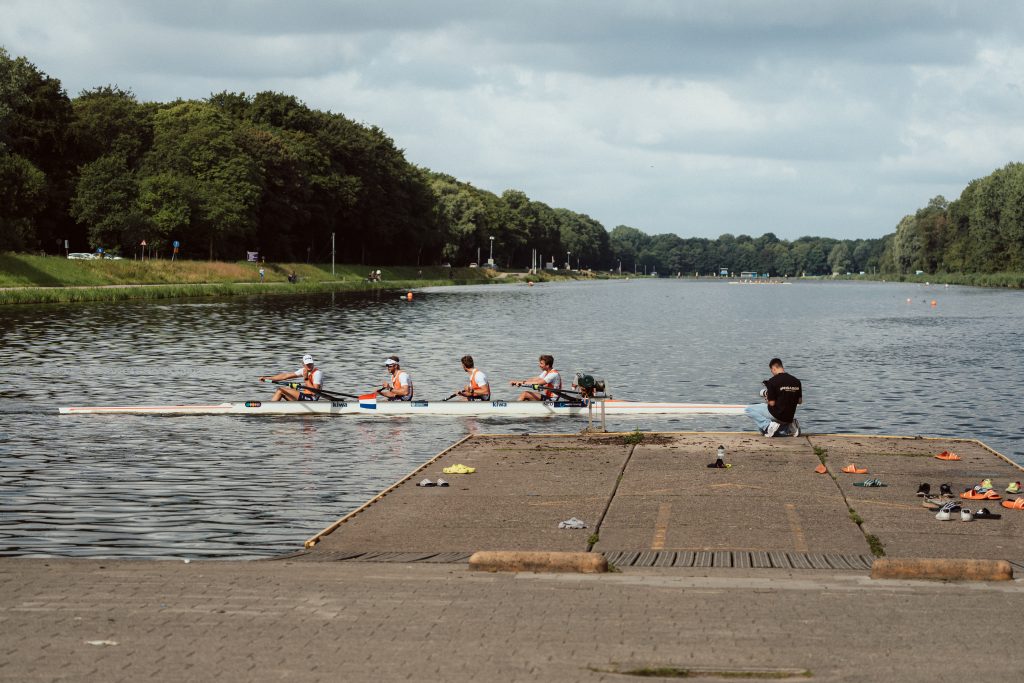

Great Britain has won all eight PR3 mixed coxed four races ever contested at a World Championship. In 2017, 2018, 2019, 2021, 2022, 2023, 2024, and 2025, the British were untouchable. Will that change this year?
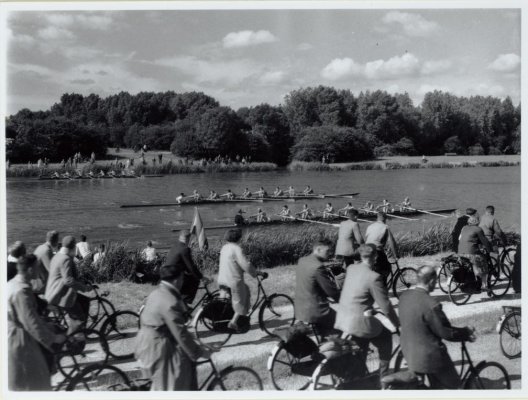
Amsterdam has hosted rowing championships for 105 years, but the Olympic Games arrived too early for the Bosbaan. The 1928 Olympic rowing events took place on the Ringvaart near Sloten—a 3,000-meter canal only wide enough for two boats at a time. The Bosbaan did not open until 1937. The Staatsloterij World Rowing Championships marks only the third global rowing championship ever held in the Amsterdamse Bos.
The men’s single sculls features the largest field of competitors, including the entire 2025 podium: 40 boats. Germany’s Oliver Zeidler is the clear favorite, having won all eleven races he entered in 2026, though he is not the reigning world champion—that title belongs to Greece’s Stefanos Ntouskos.
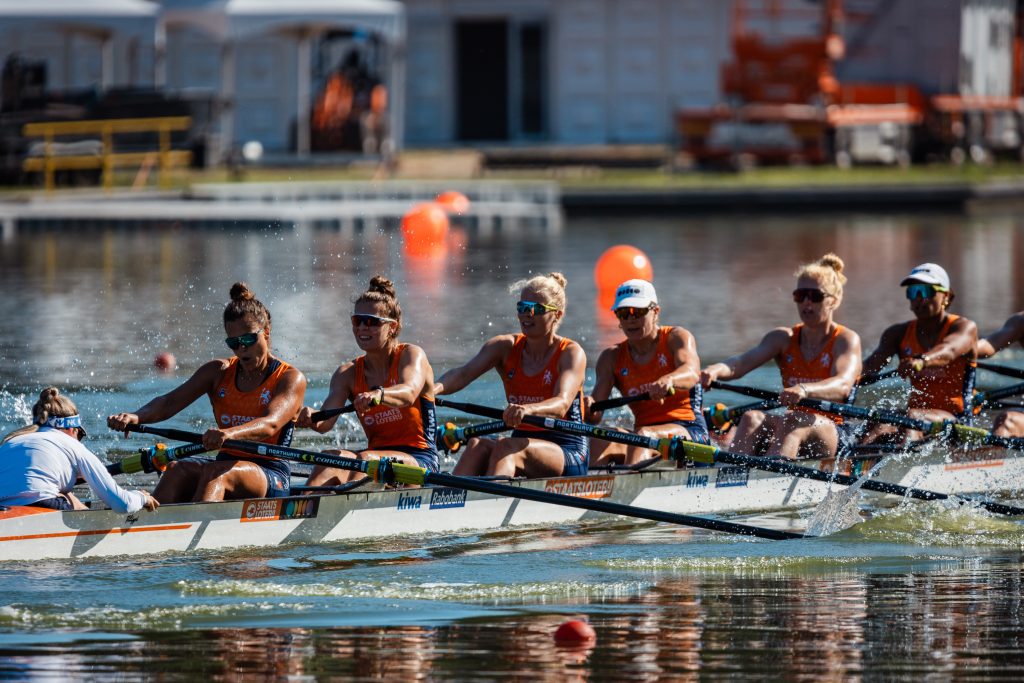
The eights (with coxswain) are considered the blue-ribbon event of rowing, and the fields at these championships are stellar. The men’s event features thirteen crews—the highest number since 2011 – prompting semifinals in this category for the first time since that year. Ten crews are entered in the women’s event; among the 90 rowers are 10 Olympic champions and 15 world champions. In the men’s event, the Netherlands arrives to defend its world title.
Will Serbia “finally” capture a gold medal this week? The Balkan rowers have earned seven World Championship medals in total, but gold has remained elusive. Mačković and Pimenov, who claimed world silver in the double sculls in 2025 and secured the European title this year, appear to be Serbia’s best shot.
Like father, like son/daughter: five children of former champions are competing in Amsterdam, two of whom share a boat. Notably, four hold Dutch citizenship:
- Finn and Karolien Florijn follow their father Ronald, who won Olympic gold in the double sculls in 1988 and in the eight in 1996.
- Ralf and Rik Rienks are the sons of Nico Rienks (also one of the two tournament directors), who won Olympic gold in the same two boat classes in 1988 and 1996, alongside a world title in 1991. Ralf Rienks and Finn Florijn sit together in the Dutch eight- the same boat class in which their fathers struck Olympic gold.
- Matteo Sartori is the son of Alessio Sartori, who won gold in the quadruple sculls at the Sydney 2000 Olympics.
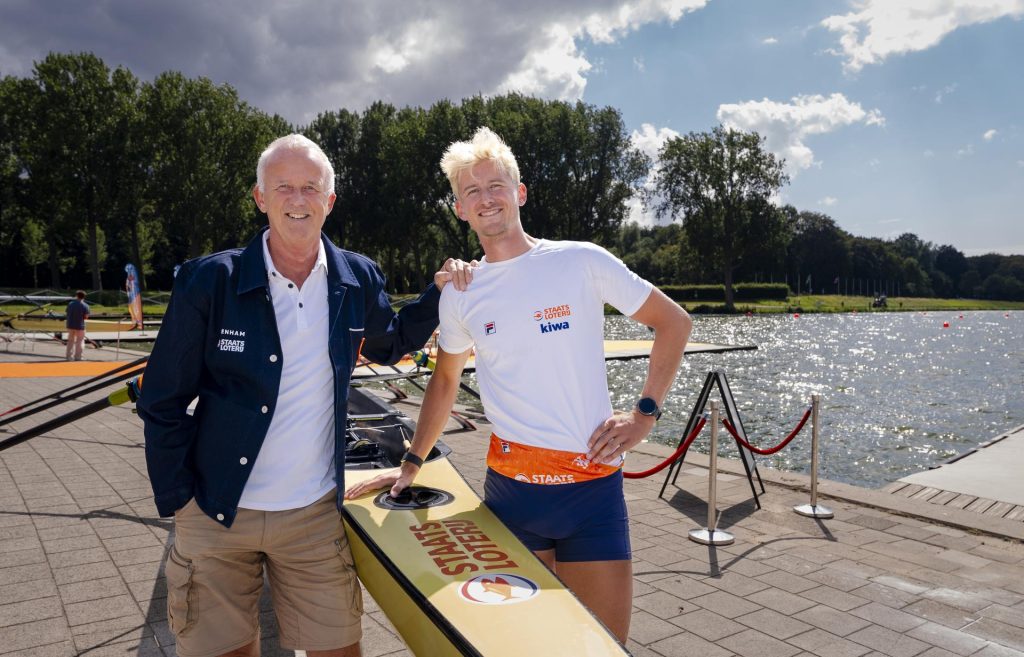
Photo credits: Photo Republic / Marco de Swart
Brace yourself: eleven sibling pairs are competing. Seven share a boat; four compete in separate events.
- In the same boat: Martin and Valent Sinković (CRO, M2x), Patrik and Anton Lončarić (CRO, M2-), Valeria and Alessia Palacios (PER, LW2x), Melita and Antonia Abraham (CHI, W2-), and Ivana and Josipa Jurković (CRO, W2-).
- In different events: Finn Florijn (NED, M8+) and Karolien Florijn (NED, W1x); Ralf Rienks (NED, M8+) and Rik Rienks (NED, M4- and Mix8+); Giovanni Codato (ITA, M8+) and Alice Codato (ITA, W2- and W8+); Annabelle Bachmann (GER, W8+ and W4-) and Luise Bachmann (GER, W8+ and W2-); Flavia Loetscher (SUI, W4x) and Lisa Loetscher (SUI, W4x and Mix8+); Mantas Juškevičius (LTU, M8+ and M4-) and Povilas Juškevičius (LTU, M8+); Gabriella Tivodariu (ROU, W4x) and Maria Lehaci (ROU, W8+ and W4-).
There is a 43-year age gap between the youngest and oldest competitors. The youngest is 16-year-old Akbarali Abduvaliev from Uzbekistan (PR3 mixed double sculls); the oldest is 59-year-old Daniele Stefanoni from Italy (PR2 mixed double sculls).
Good to know!
Not a record, but important for visitors: dogs are not allowed on the Bosbaan grounds during the Staatsloterij World Rowing Championships, spectators may not bring their own portable chairs, and there is no re-entry. In other words: once you leave the venue, your scanned ticket will not grant you access again.